SONAR automatically scans your VST folders for new plug-ins on startup, registering any unscanned VST plug-ins so that they become available in SONAR’s plug-in menus. You can turn off automatic scanning in Edit Preferences File - VST Settingsby clearing the Scan For VST Plug-ins On Startupcheck box. Click the Edit menu at the top and choose Preferences File – VST Settings. Under VST Scan Folder(s), click the Add button and browse to the folder to which you installed your new plug-in. Select, or highlight, the folder that contains your new plug-in’s.dll file, click OK. Click Scan VST Folders. The Plug-in Manager is a tool that lets you control how plug-ins appear in your application’s plugin menus. After you install Cakewalk by BandLab, you can open the Plug-in Manager from the Utilities menu. Use the Plug-in Manager to: Create and load your own menu layouts. Hide plugins by moving them to the plugin exclusion list.
Mixing ► VST configuration
SONAR automatically scans your VST folders for new plug-ins on startup, registering any unscanned VST plug-ins so that they become available in SONAR’s plug-in menus. You can turn off automatic scanning in Edit> Preferences> File - VST Settings by clearing the Scan For VST Plug-ins On Startup check box.
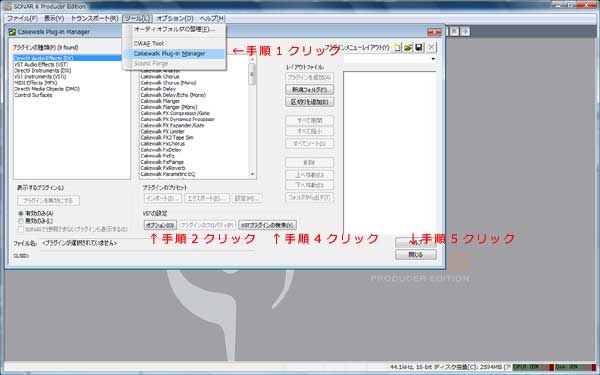
There are two places you can configure your VST plug-ins manually: go to Edit> Preferences> File - VST Settings or use the Cakewalk Plug-in Manager (Utilities> Cakewalk Plug-in Manager). You can use Edit> Preferences> File - VST Settings to set general VST options, such as choosing which folders to scan, but not specific options on individual plug-ins. Use the Cakewalk Plug-in Manager to set options on individual plug-ins (use the Utilities> Cakewalk Plug-in Manager command to open the Plug-in Manager). The following procedures explain how to use the settings in Edit> Preferences> File - VST Settings. The Cakewalk Plug-in Manager has its own help.
Go to Edit> Preferences> File - VST Settings.
Go to Edit> Preferences> File - VST Settings.
Under VST Scan Folder(s), click the Add button to open the Browser for Folder dialog box.
Choose the folder you want to add, and click OK.
The new folders appear in the VST Scan Folder(s) list, along with any folders that were already in the list.
Under VST Scan Folder(s), select the folder you want to remove, then click the Remove button.
Go to Edit> Preferences> File - VST Settings.
Under VST Scan Folder(s), select the folder you want to set options for, then click the Folder Defaults button.
In the dialog box that appears, choose from the following options (options that control properties for individual plug-ins are greyed-out: use the Cakewalk Plug-in Manager to set those options):
Enable as plug-in. Enable this option if you want to use the plug-ins in this folder as audio effects.
Configure as tempo-based effect. If the effects in this folder are supposed to respond to tempo information (for example, a tempo-synced delay), and they are not responding, make sure this box is checked.
Force stereo operation. If you need to use mono plug-ins in situations that requires stereo, you can enable this option to run the plug-ins in stereo mode. This option simply creates two identical output streams from the plug-ins where only one existed.
Do not intercept NRPNs. SONAR uses NRPNs to run automation of your VST plug-ins. However, some instruments have their own implementation of this process, so checking this box passes the NRPNs directly to the instrument, allowing it to manage its own automation.
Max used inputs. This option controls the number of sidechain inputs that are exposed by SONAR for the plug-in. The default value is the maximum number of input channels that are exposed by the plug-in. If the value is set to 2, SONAR will not display any sidechainable inputs; if set to 4, SONAR will display 1 sidechainable input, etc.
Load using jBridge wrapper. This check box is only enabled on systems where jBridge is installed. jBridge allows you to use 32-bit VST effects and instruments when using the x64 version of SONAR, as well as use 64-bit plug-ins when using the x86 version of SONAR. jBridge can also bridge 32-bit plug-ins in the x86 version of SONAR, allowing your computer to overcome the memory limitations of a single 32bit process.
Enable delay compensation. Usually, you will leave this check box the way you found it. SONAR contains a delay compensator, which turns on and off automatically for each individual plug-in (only a few plug-ins need it). If your plug-in needs extra time to process the audio data, the plug-in sends a message to SONAR, so it can synchronize playback time to the delayed output from the plug-in.
Serialize Host Access. When Serialize Host Access is selected, communications with the plug-in are serialized as far as possible. The default behavior is OFF, which allows asynchronous calls to the plug-in.
When Serialize Host Access is disabled, SONAR’s audio engine runs more efficiently and allows the UI thread to interact independently with the plug-in GUI without impacting the audio engine.
The only reason to enable Serialize Host Access would be for a plug-in that has thread safety problems leading to crashes or glitches when changing plug-in presets.
Enable mono processing.When enabled, this option replicates the audio signal from the first channel to the left and right channel, effectively forcing the output of VST to be mono.
Translate Bank/Program Changes.When enabled, this option translates MIDI program change messages into VST preset changes. This is only used for plug-ins that do not support MIDI program change messages.
Always suspend on stop.When enabled the VST plug-in state will be set to suspended when the transport is stopped in SONAR. The default behavior is to keep VST’s always in a resumed state. Enabling this option will prevent effects tails from being heard when the transport is stopped.
Always suspend on play. When Always suspend on Play is selected, the plug-in will reset when playback starts. Select this option for any VST instruments that have problems with stuck notes when stopping the transport. The Always suspend on Play property is also useful for effects that generate a tail, such as delays and reverbs. The effect is that you will hear the tails when the transport stops, but not when the transport rolls again. Always Suspend on Play is disabled by default.
Under VST Scan Options, select the Scan For VST Plug-ins On Startup check box. The next time you launch SONAR, your VST folders will either be scanned or not, depending on the option you chose.
Go to Edit> Preferences> File - VST Settings.
Sonar Vst Plugin Manager Plugin
Under VST Scan Options, select the Re-scan Failed Plug-ins check box. The next time you scan, any plug-ins that did not scan correctly during previous scans will be re-scanned.
Go to Edit> Preferences> File - VST Settings.
Under VST Scan Options, select the Re-scan Existing Plug-ins check box. The next time you scan, any plug-ins that have already been scanned will be re-scanned, and any new folder default options you have chosen will be implemented.
Sonar Vst Plugin Manager Tool
Go to Edit> Preferences> File - VST Settings.
Under VST Scan, click the Scan VST Folders button.
Go to Edit> Preferences> File - VST Settings.
Under VST Scan, click the Reset All VST Plug-ins button. The next time you scan, SONAR will set all plug-ins in your VST Scan folders to your folder default settings.
On the Utilities menu, click Cakewalk Plug-in Manager to open the Cakewalk Plug-in Manager.
In the Plug-in Categories list, select VST Audio Effects or VST Instruments.
In the Registered Plug-ins list, select the desired plug-in.
Under VST Configuration, click Plug-in Properties to open the VST Plug-In Properties dialog box.
Vst Plugin Manager Free
Select the desired options, then click OK to close the VST Plug-In Properties dialog box.
Note - Using Offline Help
Note: If you prefer to always use offline Help, go to Edit > Preferences > File > Advanced in your Cakewalk software and select Always Use Offline Help. /omnisyn-free-vst.html. Korg m1 vst free downlod.
If you are not connected to the internet, your Cakewalk software will default to showing offline help until an internet connection becomes available.